Hears the drones that radio can't see.
SIREN is a self-orienting acoustic sensor network that detects and tracks drones — including fiber-optic FPV drones that emit no radio signal — and never transmits, jams, or engages. Designed and built in the United States.
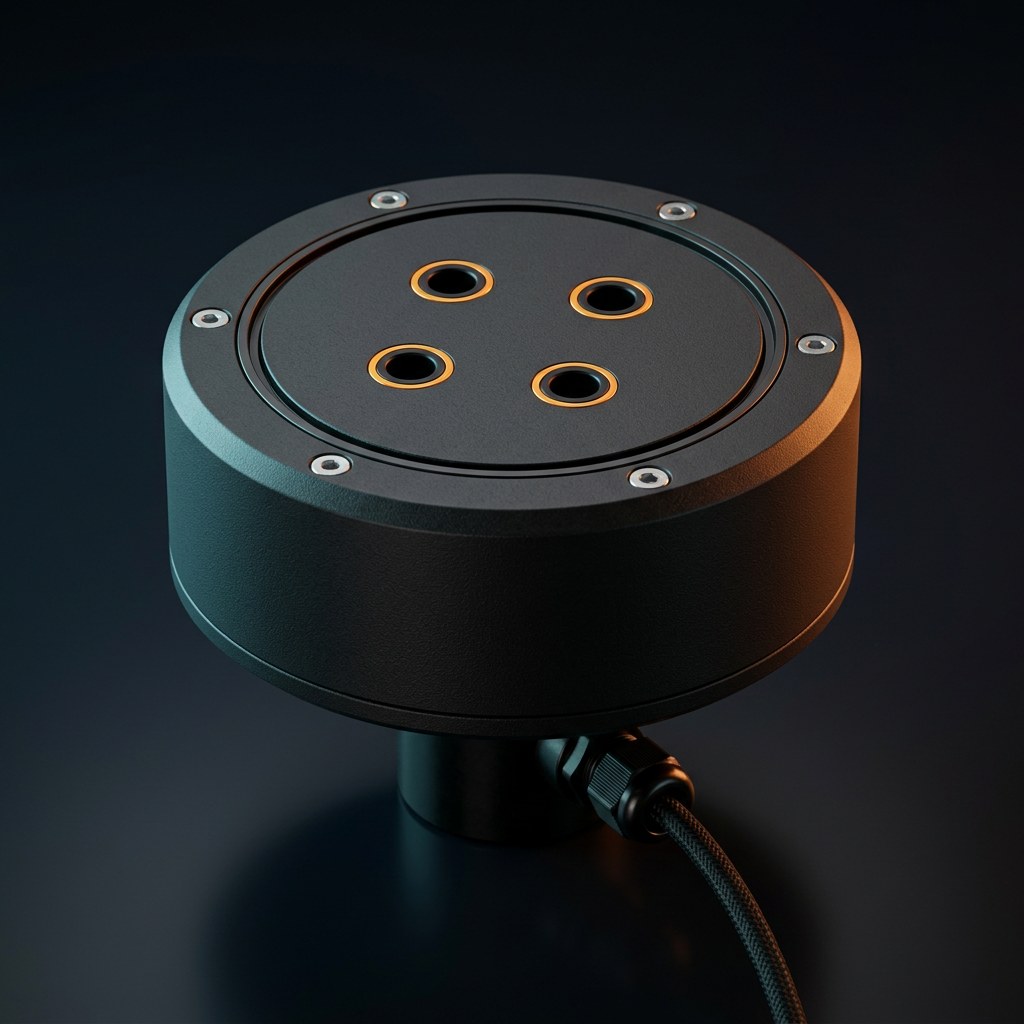
Concept render — pre-production hardware
RADIO-SILENT
Fiber-optic FPV drones carry their control link on a spool of fiber; there is no RF to detect.
UNJAMMABLE
Every RF jammer and RF detector is blind to them.
AUDIBLE
Motors and props are loud; sound is the signal that cannot be turned off.
A 4-microphone sensor head
Weatherproof, self-orienting via its own IMU.
A 7,000-parameter neural network
Runs on the node. No cloud, no raw audio leaves the device.
Each node reports a bearing
Two nodes cross-fix a position, three or more track it.
The watch station shows bearings, tracks and node health
On a live map, and pushes alerts to the operator.

Concept render — pre-production hardware
S1 SENTRY
- —Battery + 30 W solar (indefinite runtime March–October at mid-latitudes, estimated)
- —LoRa mesh uplink with AES-256 + per-node authentication
- —GPS position + IMU heading
- —1.5 m mast with ground spike
- —NEMA 4X body
- —Sub-$500 in parts per node at prototype quantity
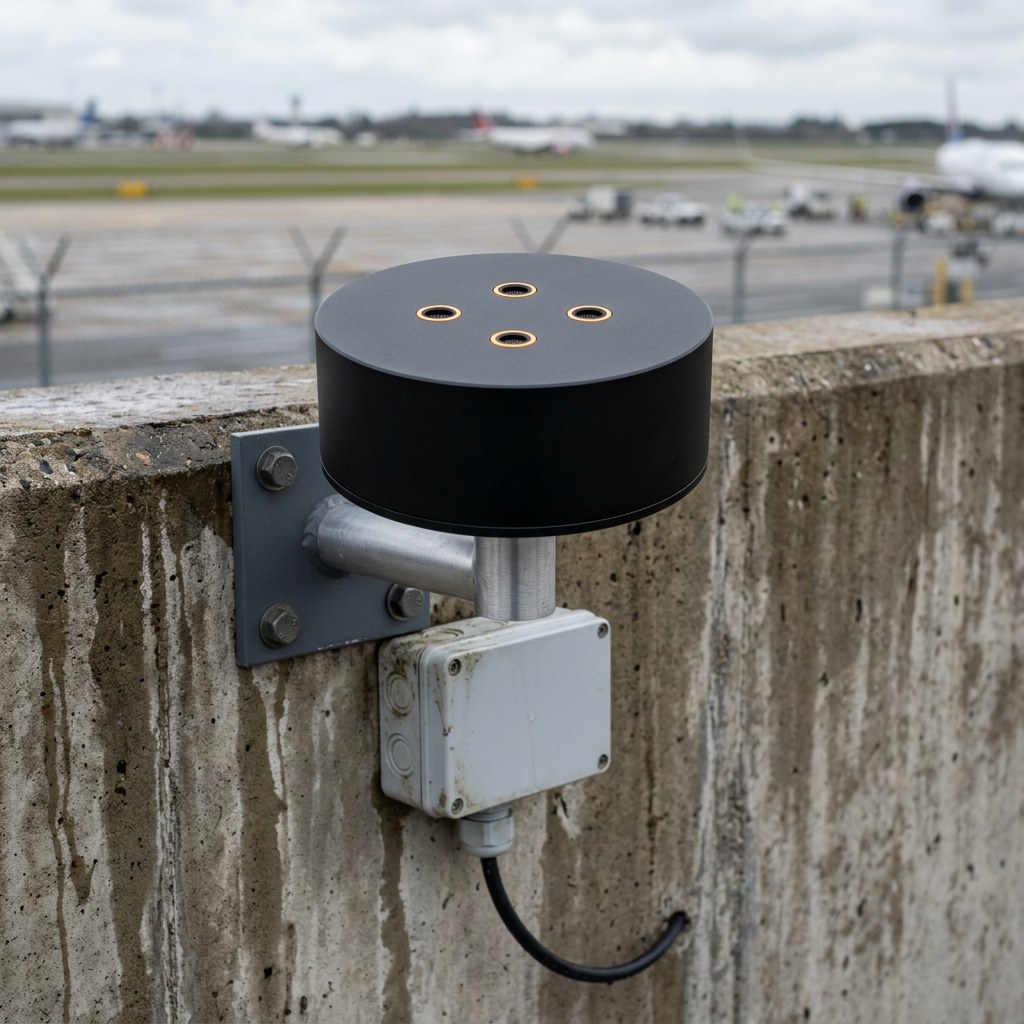
Concept render — pre-production hardware
F1 FIXED
- —One Ethernet cable for power and data
- —Same sensor head on a wall/pole bracket
- —No battery or solar
- —Direct encrypted link to the station
- —Sub-$300 parts
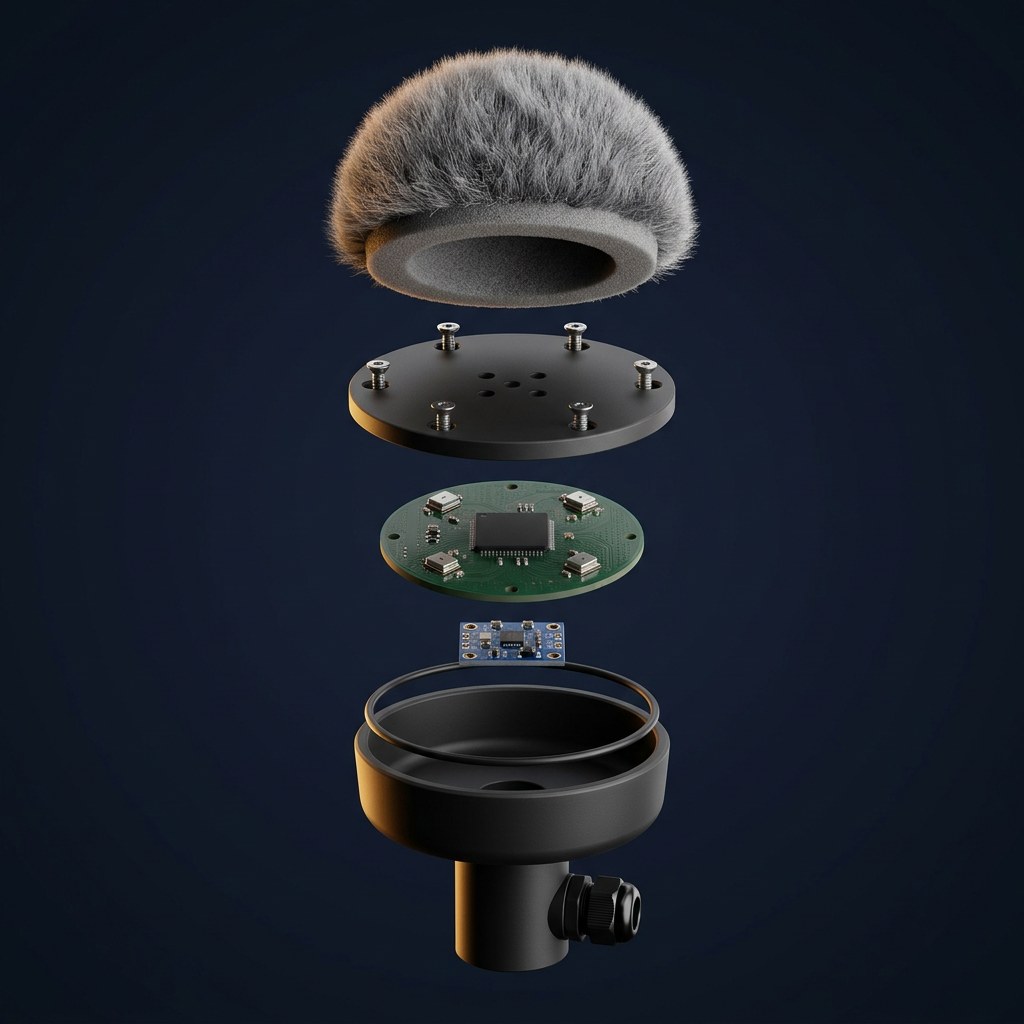
Concept render — pre-production hardware
4-MIC MEMS ARRAY
On-board DSP; raw 16 kHz multichannel processing.
9-AXIS IMU
Self-orientation for a bearing you can trust.
SEALED PUCK
120 mm weather-sealed body with ePTFE membranes and O-ring.
MAST SOCKET
25.4 mm socket for fast placement on a mast or bracket.
Coverage that hands off.
Nodes share bearings over a low-bandwidth mesh. Tracks are seeded by bearing and refined by time-difference across nodes. As the target moves, the track hands off node-to-node without breaking the operator's picture.
Distributed sensing. Graceful handoff. No single tower to fail.
Concept render — pre-production hardware
Forward operating base
Perimeter coverage from solar-powered S1 nodes on masts. Battery-only for short deployments; solar for weeks of unattended watch.
S1 SENTRYAirfield perimeter
F1 fixed nodes on fence poles watch the approach and overrun. PoE means no batteries to swap — wire once and leave it.
F1 FIXEDStadium & major event
Temporary deployment on light poles around a bowl. S1 nodes go up in minutes and self-orient without surveying.
F1 FIXEDPort & energy site
Mixed S1 and F1 nodes across a quay and tank farm. One console covers the waterfront, the berths and the tank dike.
S1 + F1PASSIVE BY DESIGN
Nothing we ship transmits at, jams or engages anything.
PRIVACY BY DESIGN
Nodes never store or transmit raw audio; only 100-byte events.
US-BUILT
Designed and assembled in the United States, NDAA-conscious bill of materials.